
Patient Stories
Real Stories,Real Voices
Endometriosis is often called an invisible disease. These are the people living it — in their own words.
Told by the people who lived it
Patient Stories is a space for people affected by endometriosis to share what their journey has actually looked like — diagnosis, treatment, the years in between, and everything that came after.
Each story starts with a short interview, conducted over email or Zoom with a member of our team. From there, we work together to turn it into a short written piece or a video segment, and share it here with your permission — using your name, initials, or anonymously, whichever you're most comfortable with.
Willing to share your story? We'd be honored to hear it.
Your story could help someone else
Sign Up to Be Interviewed
Fill out a short interest form and our team will follow up to schedule a conversation over email or Zoom, whichever is easier for you.
Start the Sign-Up Form →Read & watch
Written Story
"Jane"
Diagnosed with endometriosis three years after a near-fatal ectopic rupture, "Jane" shares what it took to finally be believed.
Read the full story →
← Show less
“Jane” was diagnosed with endometriosis three years after experiencing an ectopic rupture. She wants to share her story so that other women can be educated and prepared about what to expect and how to care for themselves in the event of an ectopic pregnancy. Note that her name has been changed for privacy and the interview has been paraphrased for clarity.
Trigger warning: pregnancy loss, near death experiences
“Jane,” when you reached out to us, you mentioned that your symptoms and extreme pain started after an ectopic rupture. Can you share more about this experience that led to your diagnosis? Once you started having symptoms, were they dismissed as "normal period pain" by doctors, family, or friends? If so, how did this dismissal affect you and your diagnostic journey?
I found out that I was pregnant on Christmas Eve, 2020, after over a year of trying. On January 12, 2021 I woke up in the middle of the night with intense pain, but it subsided and I fell back asleep. I was accustomed to intense cramping during my periods and was always told that it was normal, so it didn’t seem like anything to worry about. However, later that day while my husband was at work, the intense cramping returned. It was the worst pain I had ever felt in my life. I felt like I needed to defecate but I couldn't, and I started to feel stiff like I couldn't move. I called my OB/GYN’s office to ask whether they could see me before my imaging appointment the next morning, but they said I couldn’t get in any sooner. I then called Urgent Care, but they couldn't see me either; while on the phone with them, I stood up and promptly fell to the floor, unconscious. I woke up to my dog pouncing on my face. My phone had fallen about a foot away from me; it was ringing as Urgent Care was calling me back. I told them I was on the floor and didn't know what happened. They dispatched Emergency Medical Services and told me to call 911. I couldn’t get up so I belly crawled all the way to the door to unlock it. My dog followed me and stayed with me until EMS arrived, but I started to lose consciousness again as they walked in. One of the younger EMS men leaned over me and said "You know, cramps are a normal part of the first trimester." I will never forget that moment. I was dying and begging for help and I was still being told that my pain was "normal.”
When I got to the ER, my memory became a bit foggy. I remember them asking me to sign paperwork, but I couldn't move my hand to sign because I was so stiff and in so much pain. I didn't understand why. I remember saying I needed to throw up; they handed me a bucket. I started convulsing and screaming in pain, so my nurse hit the crash cart button. A team rushed in and told my husband, who had just arrived, that I was bleeding internally up to my collar bone and needed to be rushed into emergency surgery to save my life. I remember being rushed into the surgical suite. The anesthesiologist told me I’d feel “a slight pinch" while they intubated me, but it felt like I was choking on a dozen thorny rose stems — I thought I was dying in that moment. To this day, I wish the anesthesiologist had been more honest because that was not a slight pinch. I woke up in the recovery room, shivering uncontrollably even with three warm blankets. They let my husband in to sit with me and explained that I would be going home; when my husband asked why I was shivering so much, they told him, "That's just the anxiety — she doesn't like hearing us talk about this." Meanwhile, I was sitting right there and fully understood everything.
It was not anxiety. I had lost over two pints of blood from internal bleeding — a pain I would wish on no one. There was debate on whether or not I needed to be admitted for a blood transfusion, but my surgeon decided to discharge me anyway. Unsurprisingly, I lost consciousness again as they attempted to wheel me to my car. I woke up back in the bed in the recovery room where they told me I would be staying for a blood transfusion. After multiple failed attempts to start an IV, they resorted to putting a catheter in my arm, as they were unable to find a suitable vein. I stayed overnight in the hospital, alone because of COVID-19 social distancing, to receive one unit of blood. Meanwhile, I was still in so much pain from the abdominal surgery. The surgeon stopped by to tell me that it was the worst case of ectopic rupture he had seen in his entire career. I was sent home the next day but I was bedridden for almost 6 weeks because of how weak I was — I could not walk without feeling like I would faint again.
About a week into my bedrest, I felt like I had a UTI. My primary care doctor told me over the phone that it was anxiety and to give it a few days, despite the fact that I was familiar with UTI symptoms. I couldn't wait that long so my husband drove me to Urgent Care, where I was not only diagnosed with a UTI but also sent back to the emergency room for more fluids because my orthostatic vitals were at a dangerous level. After more fluids, I did slowly start to feel better, but something was still wrong. I wasn't fainting anymore but I was in so much pain and I didn't understand why. I was having extreme pain flare-ups in the right side of my pelvis — the same side that my tube was removed from. At first, I thought I had fallen on my hip and needed an x-ray. But I was denied an x-ray as "it’s too close to the pelvis” and I was of childbearing age — because that was more important than figuring out what the issue might be. At my post-op appointment, my surgeon told me that he was shocked I survived. When I asked what caused this, he said sometimes it just happens; he mentioned that while he was in there, he didn't really see signs of issues such as endometriosis.
I spent the next four years in indescribable pain. I could feel the pain flare-ups coming, and I knew I would have about 10 minutes to find somewhere to lay down to spend the next 45 minutes in absolute agony. Nothing helped — NSAIDS, Tylenol, Ibuprofen. Doctors either didn't believe me or just could not figure out the cause. I am very lucky that I had military insurance because I think we would have gone bankrupt with all of the different tests and treatments, MRIs and physical therapies. Pelvic Floor Physical Therapy was helpful because it released the muscles. I’m very lucky to have met my pelvic floor therapist because she was the first person to identify my symptoms and voice her suspicions that I had "either endometriosis or pelvic congestion syndrome." My ultrasounds showed that the right side of my pelvis was vascularized during flare-ups. During this time period, I also developed an intense intolerance to gluten...and realized that the migraines that I’d had my entire life were triggered by gluten.
My family moved to Boston as I desperately searched for a doctor who could help me. I found a clinic within Beth Israel Lahey that had specialists in female pelvic pain. I had to wait six months for an appointment. I was so afraid of being dismissed and so traumatized from being gaslit by previous medical teams that I am "normal" or "fine", that I made a medical binder to prepare for this appointment. In this binder, I had a copy of every test run on me. I had documents listing my symptoms on a "good day" and symptoms from pain flare-ups. I had diagrams where I drew the pathway of my pain. By the time I got to that appointment with the surgeon, I brought it with me and was absolutely ready to make my case. But I didn't need to. She took one look at me and said she believed me. I handed her the binder and explained why I had it, and she was mortified to hear about my experiences. She immediately recommended surgery to look for endometriosis because I had told her that due to my health issues, I never wanted to risk pregnancy again. She didn't question my decision or make me feel guilty. She saw someone in absolute desperate need and was ready to help me.
I had the surgery about a month later. I was diagnosed with stage two, clinically severe endometriosis and pelvic congestion syndrome. I had both conditions simultaneously, as they essentially feed off of each other. Endometriosis was also found growing on my intestines, which helped explain some of the leaky gut symptoms with regard to gluten. It was all connected. I was validated, my pain was real and proven.
Were you familiar with the condition of endometriosis prior to receiving your diagnosis? Are there any individuals within your immediate family who also had been diagnosed with endometriosis or had experienced endometriosis-like symptoms?
No one in my family had been diagnosed with endometriosis, but my family also has a history of avoiding the doctor or pushing through the pain. I was aware of the existence of this condition, but I never thought I had it. I was always told that what I was experiencing was normal.
Do you still experience pain or fatigue that alter your ability to work, study, or maintain hobbies?
Sometimes. But it really is so much better and under control with treatment and with advanced education on how to release muscles in my pelvis as needed. If it becomes more than I can control, I go back into the pelvic floor physical therapist’s office for help. I do still struggle with fatigue, but not as much now that pain is mostly under control.
In what ways has this condition shaped your relationships, dating life, or family dynamics?
My relationship did not suffer — I am so lucky to have the partner that I have. He is understanding of the pain and does anything to help me, and did not blink at the infertility diagnosis. My other family members actually gave me more of an issue, because they were pushing me to try IVF or other fertility treatments that I knew my body could not handle. It was extremely upsetting and invasive. If someone tells you that they are fine not being able to carry children, leave them alone.
How has managing a chronic, often invisible illness impacted your emotional well-being?
For years, I was depressed because it seemed like no one who had the tools to help believed me or cared enough to figure it out. When we adopted our son, I was physically unable to play with him in the way that I wanted to. I am still physically limited at times — I cannot always keep up with him at the playground, but I am better than I used to be. No more putting on the TV while mommy lays in the fetal position on the floor begging for relief.
Do you have any ongoing concerns for the future? (pregnancy, recurrence, etc.)
I have concerns about whether there will be legislation that outlaws IUDs. I have been tracking legislation since 2021 and there have been some attempts at this in a few states, because they are labeling it as an abortifacient. If this happens, the one medication giving me a good quality of life would be outlawed.
What are your most effective coping mechanisms or strategies that you employ in order to manage living with endometriosis?
They are as follows: IUD to control growth, anti-inflammatory diet, pilates/yoga or pelvic floor therapy, neuromuscular massage sessions, heat application to my hip, and muscle release as needed (because I spent so much time in physical therapy that I have learned how), fascia release on my abdomen with a cupping set, and regular exercise in swimming because it does not cause pain but helps me get stronger.
Where have you found the most reliable support or community?
My husband is the single most supportive person in my life. If I didn't have his support, I would be alone in this.
What do you wish the general public, employers, and doctors understood about living with this disease?
It doesn't look like a disability, but it can be. I have had to find a place to hide in the grocery store before because a pain flare-up hit and I couldn't get to my car. It also doesn't just happen around your period — my pain was every single day. The public also needs to understand that medication like IUDs do not just prevent pregnancy; they are life saving medication to someone like me.
Based on your patient experience, what gaps do you see in women’s health research and medical care? What changes do you hope to see in patient care, health policy, and social support?
The gaps in women's healthcare is greater than anything I could write here. I was being gaslit that my pain was normal while I was actively dying of internal bleeding and losing consciousness. That is a clear example of how poorly women's health care and pain is treated in this country. There is absolutely no reason that the average person doesn't get diagnosed with something like endometriosis until after seeing four doctors and spending ten years of their life searching for answers. When I found out about that statistic, I made a choice to advocate for myself. I no longer cared if I came across as difficult or ruthless to medical staff. Sometimes I think the reason I got answers within those five years is because I decided that I needed to be a bitch in order to survive or get better.
As far as health policies, there should be zero health policy that limits a woman's ability to seek treatment for any condition. It's that simple. No person should have to worry about being able to get health care based on the opinions or beliefs of others. No person should have to worry about whether or not their medication will be outlawed based on the beliefs of others. As a military spouse, I am well aware that the government controls which state I live in. My access to treatment depends on the state that I live in. This does not change for my spouse; he has no problem accessing any medical care that he needs. That is immoral.
What advice would you give to your younger self or someone who is actively seeking an endometriosis diagnosis?
Be aggressive in advocating for yourself. Do not take no or “anxiety” for an answer. Ask them to document on your chart that you are not getting the test you asked for, ask them to put everything in writing. Also, create a medical binder. I was taken more seriously when I showed up with a binder of proof that I had done tests, charted my pain pathways, listed my symptoms, and researched potential conditions that matched those symptoms. It is absolutely sad that I had to do this, but I believe it was a key in getting answers I needed in a faster timeline than the average statistic.
Is there anything else that you’d like to share with us?
This condition can be controlled and your quality of life can improve. I thought I was going to feel sick for my entire life, but now I am able to run and swim and play with my child. I look back on those years, how sick I was, and it baffles me that I was ever like that. I hope science catches up one day so none of us ever have to experience this.
As Dr. Camran Nezhat says, forward we go!
A big thank you to “Jane” for taking the time to share these insights with EndoMarch!
Written Story
Cassandra
Cassandra was diagnosed with endometriosis when she was 15.
Read the full story →
← Show less
Cassandra was diagnosed with endometriosis when she was 15. Now in her 30s, she shares her diagnostic journey. Note that the interview has been paraphrased for clarity.
Cassandra, how old were you when you first started experiencing symptoms? How many physicians did you see about your symptoms before getting diagnosed?
I started experiencing symptoms when I first got my period at 13 years old. I honestly thought it was normal and just what periods were. I saw so many doctors and naturopaths to explore why I was always in pain and had so many bowel issues.
Can you elaborate on how you first heard about endometriosis? Are there any individuals within your immediate family who also had been diagnosed with endometriosis or had experienced endometriosis-like symptoms?
I only heard about endometriosis from a doctor who was working in the emergency room. My mum had taken me to the emergency room countless times and they just kept saying it’s stress or just a period. This was the first time I met a real doctor who believed me after I was vomiting in pain. I don’t have anyone else in my immediate family with endometriosis so there was no one to help me. My mum and brother do have Crohn's disease so I was constantly checked for that as it has some similar symptoms.
Were your symptoms ever dismissed as "normal period pain" by doctors, family, or friends? If so, how did this dismissal affect you and your diagnostic journey?
My symptoms were always dismissed; they said I was making it up and it’s just stress or my body is just sensitive. I was often taken out of school due to pain. I was told to get an ultrasound, but it found nothing. Being constantly dismissed as a young girl, I started to believe it was all in my head. People told me it’s just being a girl and to not be dramatic about it. It was a girl issue and I wasn’t to talk about it.
How has your diagnosis improved your quality of life? Which treatments did you find helpful?
Diagnosis has improved my life—obviously not being in pain daily is much better. But it has rapidly made life more difficult due to being gluten-free, lactose-free, and on a FODMAP diet, as well as taking pills constantly and having surgeries every 3 to 5 years. It also made becoming pregnant increasingly difficult, which is why I did IVF.
Treatments that help include being gluten-free, avoiding foods that trigger inflammation, working with a naturopath for herbs like NAC (N-acetylcysteine), heat packs, a TENS machine, and surgeries (effective, yet painful). Seeing a pain specialist has also helped. Additionally, Mirena helped stop bleeding (but destroyed my hormones and body).
Do you still experience pain or fatigue that alter your ability to work, study, or maintain hobbies?
Yes, I still have pain, but not as often. I do need to get a hysterectomy next, but I'm not ready for that yet. The pain is very debilitating and the fatigue makes working very hard.
In what ways has this condition shaped your relationships, dating life, or family dynamics?
Endometriosis has completely changed everything. I was diagnosed at age 15 years. During that time, I had to withdraw from all social interactions as I was always sick. I became the sick girl. I missed almost all of Years 9-10. I became very lonely and struggled with severe social anxiety. My family didn’t really understand — having two brothers with other illnesses including cancer, mine wasn’t a big deal. I learnt to shut out how I was feeling. It was very difficult to become pregnant due to endometriosis. I did 3 years of IVF, which changed every part of me and gave me deep depression. It’s the hardest thing I’ve ever done.
How has managing a chronic, often invisible illness impacted your emotional well-being?
Having endo has just been seen as a big inconvenience by my family, which has greatly impacted my emotional well-being. Being sick all the time has made friendships very hard and missing out on social events has had a big impact. The largest impact though has been my fertility issues. I didn’t know I would be so impacted by this. It has been the biggest struggle.
Do you have any ongoing concerns for the future? (pregnancy, recurrence, etc.)
I have ongoing concerns about IVF — I was fortunate to have had one positive pregnancy, but because of the mental, emotional, and physical toll it took on my body, it will probably be the only one. I also know that another surgery is in my future, but it’s hard to know what the pains are and when I should have another surgery.
What are your most effective coping mechanisms or strategies that you employ in order to manage living with endometriosis?
Management involves learning about the disease yourself and seeking out treatment yourself. I use a TENS (transcutaneous electrical nerve stimulation) machine and see a pain specialist for breathing techniques. Dietary habits and surgeries have also helped.
Where have you found the most reliable support or community?
Facebook groups — when I was first diagnosed there was nothing.
What do you wish the general public, employers, and doctors understood about living with this disease?
As a teacher, I wish endometriosis was understood, taught, and given more sick leave. All doctors should know it’s a whole-body disease that affects you not just when you're bleeding, and they should understand the connection between food and endo.
Based on your patient experience, what gaps do you see in women’s health research and medical care? What changes do you hope to see in patient care, health policy, and social support?
There is very little advice, knowledge and compassion for women's diseases, especially for taboo topics such as periods. I want people to know it’s a whole body inflammatory disease that has no cure. There should also be funding to support women with ongoing health costs.
What advice would you give to your younger self or someone who is actively seeking an endometriosis diagnosis?
I’d tell them, “It is not all in your head and you’re sick. You will need to advocate for yourself, change your eating habits and to not be too hard on yourself.”
Is there anything else that you’d like to share with us?
It’s a long ongoing process that I am still trying to navigate daily. I hope younger women get more help and support than I did. I truly hope that all our voices are loud enough to bring change and to find a cure. I hope that one day, society will understand and care about how badly endometriosis can affect women’s daily lives.
As Dr. Camran Nezhat says, forward we go.
Thank you to Cassandra for sharing her experience!
Written Story
Gina
Gina was diagnosed in her 30s after experiencing fertility issues.
Read the full story →
← Show less
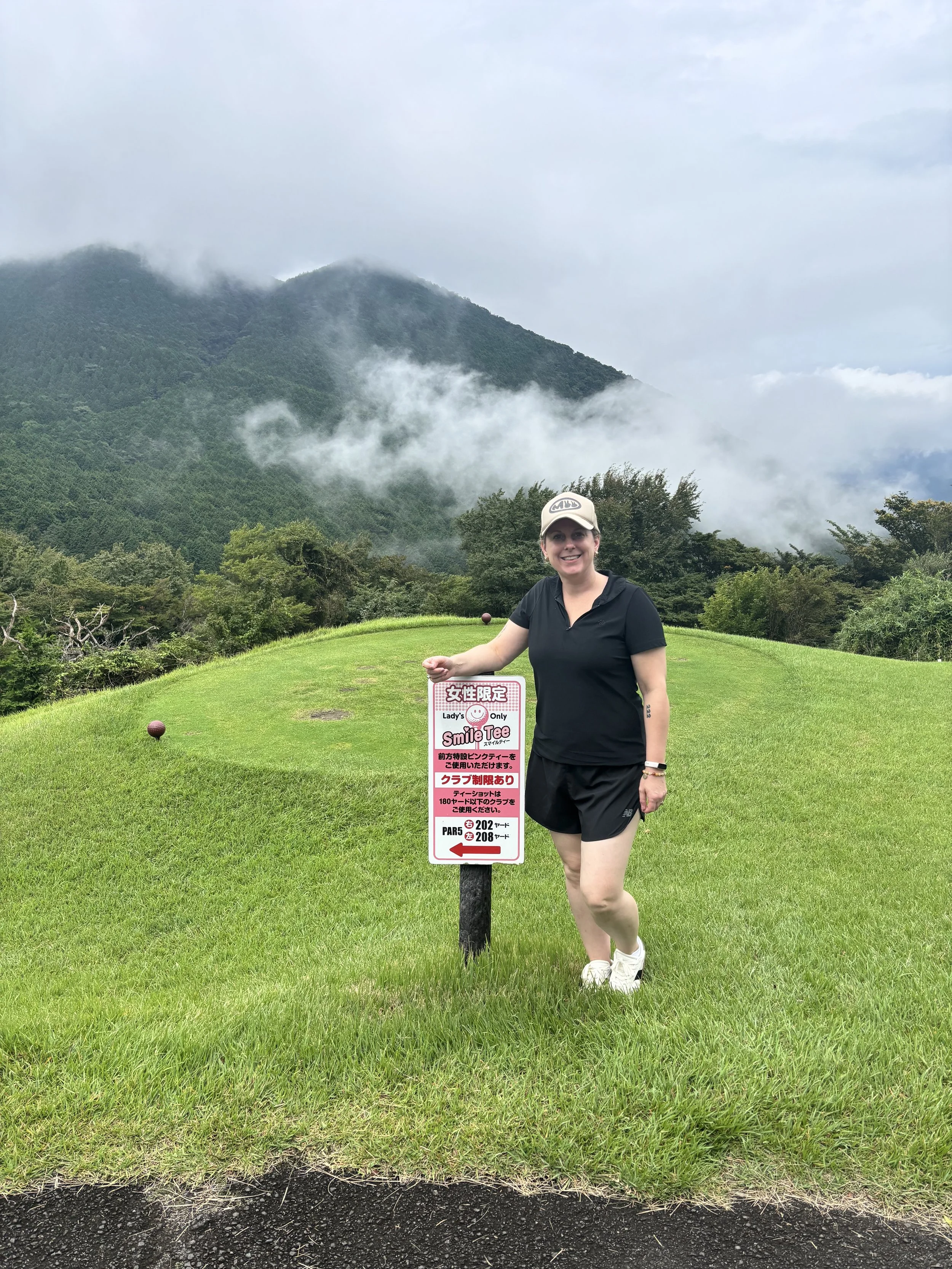
A recent photo of Gina golfing in Japan. Since her diagnosis, she's traveled to four different countries.
How old were you when you first started experiencing symptoms? How many physicians did you see about your symptoms before getting diagnosed?
I remember experiencing symptoms at around age 15, and didn't receive my diagnosis until over 20 years later at age 36. I saw numerous (7-8?) physicans before getting diagnosed.
Were you familiar with the condition of endometriosis prior to receiving your diagnosis, and are there any individuals within your immediate family who also had been diagnosed with endometriosis or had experienced endometriosis-like symptoms?
It wasn't until my 30s when I started having fertility issues that doctors started suspecting endometriosis, and that's when I learned about endo. I have an aunt that also experienced fertility issues when she was younger and then was later diagnosed with endo.
Were your symptoms ever dismissed as "normal period pain" by doctors, family, or friends? If so, how did this dismissal affect you and your diagnostic journey?
Yes, I was told repeatedly that "some people have worse periods than others" and that my pain was normal. At some point I think I just accepted this, even though I knew deep down that something was wrong. I would still mention my symtpoms at routine doctor appointments but I mostly suffered in silence and isolation.
How has your diagnosis improved your quality of life? Which treatments did you find helpful?
My disagnosis was life-changing. Living with chronic pain for so many years contributed to cycles of anxiety, depression and addiction throughout my life. Once I began to understand how all of these things were connected and intertwined, I was able to start my healing journey. I am now 5 1/2 years sober and am able to manage my anxiety and depression. It took several years of treatments, and three surgeries to finally find relief. Unfortunately my first two surgeries were ablation rather than excision and my symptoms returned almost immediately. It wasn't until I started doing my own research when I learned that excision surgery is the gold standard and I had to seek treatment in another state. I had excision surgery at Mayo Clinic in 2024 and have been on hormones to decrease the chances of endometriosis growth. I have been mostly symptom free since then.
Do you still experience pain or fatigue that alter your ability to work, study, or maintain hobbies?
For the past two and a half years since my excision surgery and going on hormone treatment I have been able to live the life that I was meant to live. I can travel without being afraid of a flare-up, I have far fewer sick days at work, and am able to enjoy life with minimal pain.
How has managing a chronic, often invisible illness impacted your emotional well-being?
Managing this illness alone has contributed to years of anxiety, depression and addiction. It has taken a lot of work and therapy to untangle the complex relationship between these conditions.
Do you have any ongoing concerns for the future? (pregnancy, recurrence, etc.)
I do worry about recurrence as I know I'm not "cured".
What are your most effective coping mechanisms or strategies that you employ in order to manage living with endometriosis?
Therapy, and learning to be kinder to myself.
Where have you found the most reliable support or community?
The online community is amazing! I learned more from them then I did from my local doctors. And then finally going to Mayo Clinic where I found endometriosis experts.
What do you wish the general public, employers, and doctors understood about living with this disease?
It is an incredibly isolating and lonely disease. There needs to be more awareness and research.
Based on your patient experience, what gaps do you see in women’s health research and medical care? What changes do you hope to see in patient care, health policy, and social support?
There are so many gaps in women's health research and care. It took years of me doing my own research and self-advocacy to find relief. Women (and nonbinary and trans people living with endo) need to be believed and not dismissed.
What advice would you give to your younger self or someone who is actively seeking an endometriosis diagnosis?
As exhausting as it is, do your own research and don't give up. I spent far too many years accepting what doctors told me even though I knew something was very wrong.You have to be your own advocate.
As Dr. Camran Nezhat says, forward we go.
Thank you to Gina for sharing her experience!
Get in touch
Ready to make a difference?
Whether you're a patient, provider, advocate, or ally — there's a place for you in this movement. Join us and help end centuries of silence.
Join EndoMarch